

Google is developing multiple Googlebooks powered by Intel Core Series 3 (Wildcat Lake), and I have confirmed that work has begun on a new board called "Oncilla."
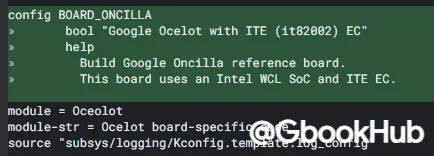
A commit spotted on Chromium Gerrit indicates that "Oncilla" is based on the Ocelot development board (RVP), though detailed specifications remain unknown at this stage.
Based on Ocelot Configuration
The initial project commit for Oncilla adds only minimal configuration files, with its settings derived from Ocelot's configuration for Intel's RVP (Reference Validation Platform).
With many items such as the battery still unconfigured, few Oncilla-specific specifications are visible yet, though the code indicates it is likely to include at least two USB-C ports (without USB4 support).
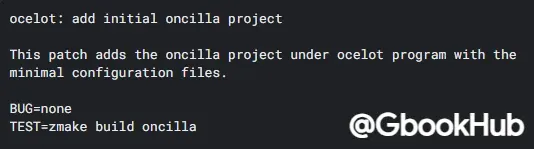
Additionally, the developer who submitted the Oncilla commit is from Longcheer, a Chinese ODM that handles device design and manufacturing.
Longcheer manufactures smartphones and tablets and works with brands such as Xiaomi, Samsung, Lenovo, Honor, OPPO, and vivo. At this point, however, it is unclear which manufacturer's device it is handling here, and no code indicating Oncilla's manufacturer has been identified yet.
10 Devices in Development in the Ocelot Family
With the start of Oncilla's development, there are now 10 development boards in the "Ocelot" family of Googlebooks powered by Intel Core Series 3 (Wildcat Lake):
-
Ojal (Unknown)
-
Matsu (Acer)
-
Kodkod (Unknown)
-
Ocicat (HP convertible)
-
Hekla (ASUS)
-
Coolum (HP clamshell)
-
Blanc (Lenovo)
-
Libra (Dell)
-
Pelion (Unknown)
-
Oncilla (Unknown)
Note that the manufacturers listed above are only projections based on the code and could change during development.
In any case, development has only just begun, and more detailed specifications are expected to emerge as work progresses.