

On July 23, Primate Labs announced the release of Geekbench 7, the latest major update to its cross-platform benchmarking utility.
With this release, the multi-core benchmarking methodology has been entirely overhauled, and the GPU benchmark suite now features NVIDIA CUDA support. This marks a significant shift in how both CPUs and GPUs are evaluated. Because of these fundamental changes, Primate Labs notes that Geekbench 7 scores cannot be directly compared to those from Geekbench 6.
Redesigned multi-core testing reflects real-world apps
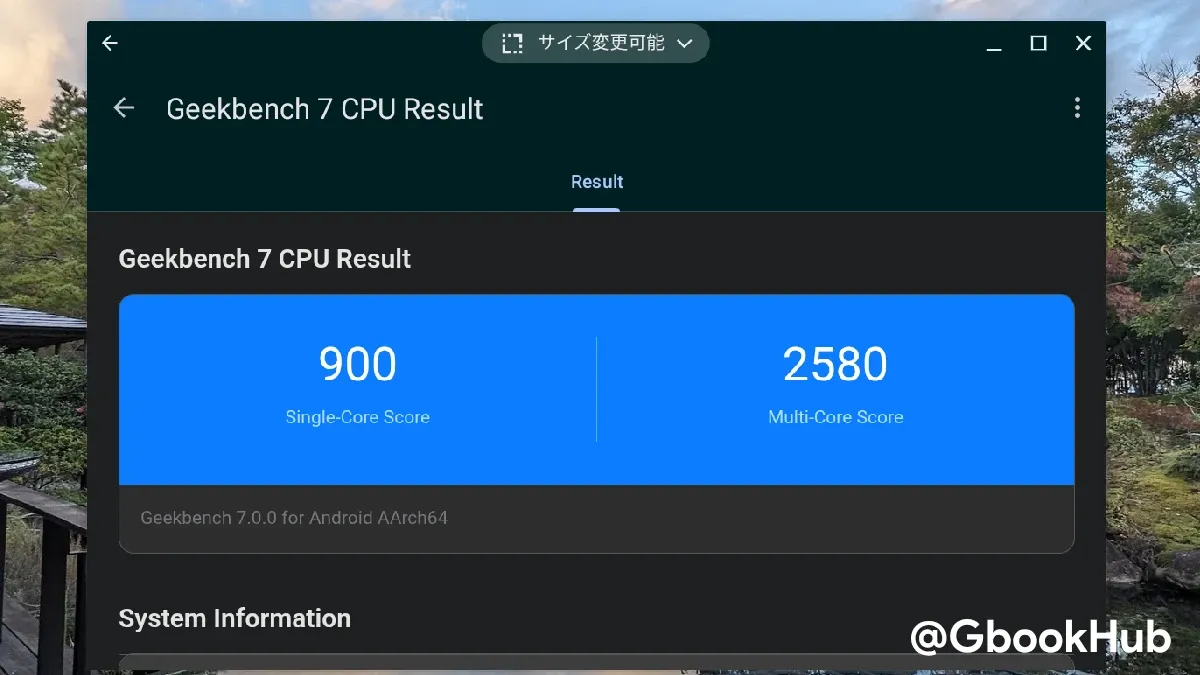
Up through Geekbench 6, the software assumed that all tasks were executed across multiple threads. However, since many real-world applications function more like single-threaded processes, the previous methodology didn't always provide an accurate reflection of daily usage.
Geekbench 7 corrects this by ensuring that only workloads that actually utilize multi-threading in everyday apps are executed as multi-core benchmarks. For example, the HTML5 browser test is no longer included in the multi-threaded suite, as web browsers inherently behave closer to single-threaded applications.
New media-centric workloads
The CPU benchmark suite now includes new media-related workloads designed to measure audio and video encoding, decoding, and overall processing capabilities. The additions include:
-
Screen share video encoding via the AV1 codec
-
Audio compression using the Opus codec
-
Live caption generation powered by the Whisper speech recognition model
Additionally, the update introduces a game physics workload utilizing the Jolt Physics engine, an expanded Photo Editor workload, and an updated Photo Library test that now supports newer image formats like JPEG XL and DNG.
Revamped GPU benchmarks with CUDA support
GPU benchmarking has also been redesigned to place a sharper focus on machine learning and content creation workflows. New tests include:
-
Facial recognition and real-time filtering for video
-
AI-driven image super-resolution
-
Background blur processing for virtual meetings
Alongside these, Primate Labs has added intensive GPU image editing and compositing workloads, including RAW image processing, video color grading with LUTs, path tracing, and fluid simulation.
In terms of APIs, the app now supports NVIDIA CUDA—in addition to OpenCL, Vulkan, and Metal—bringing broader and more accurate measurement capabilities for NVIDIA GPUs.
Larger, more complex datasets
The datasets powering each workload have been scaled up. The File Compression test now processes a wider variety of archives, incorporating source code, object code, and text documents. Meanwhile, the PDF Viewer workload has been updated to handle a broader spectrum of files, ranging from simple park maps to dense technical and academic papers.
A viable benchmarking tool for Googlebooks
Historically, evaluating Chromebook performance meant relying on browser-based tools like Octane 2.0 Plus, JetStream, Speedometer, MotionMark, and WebXPRT. While Android apps offered alternatives like Geekbench, PassMark, PCMark, and 3DMark, running them on a Chromebook via a virtualized environment often led to compatibility issues or inaccurate measurements.
However, with upcoming Googlebooks transitioning to a native Android environment, these benchmark apps—including Geekbench 7—will be able to run stably. This shift is expected to yield much more accurate, real-world performance metrics on Googlebook hardware.
Geekbench 7 remains a comprehensive cross-platform app, available for Android, iOS, Windows, macOS, and Linux.
It continues to be free for personal use, and to celebrate the launch, Geekbench 7 Pro is currently available at a 20 percent discount on the Primate Labs Store through August 6.